
Fixtures and Touchpoints
Toilets, urinals, flush controls, partition latches, door hardware, faucets, counters, and dispensers are cleaned according to the written checklist.
Serving Seattle, Washington & surrounding areas
Open 24/7
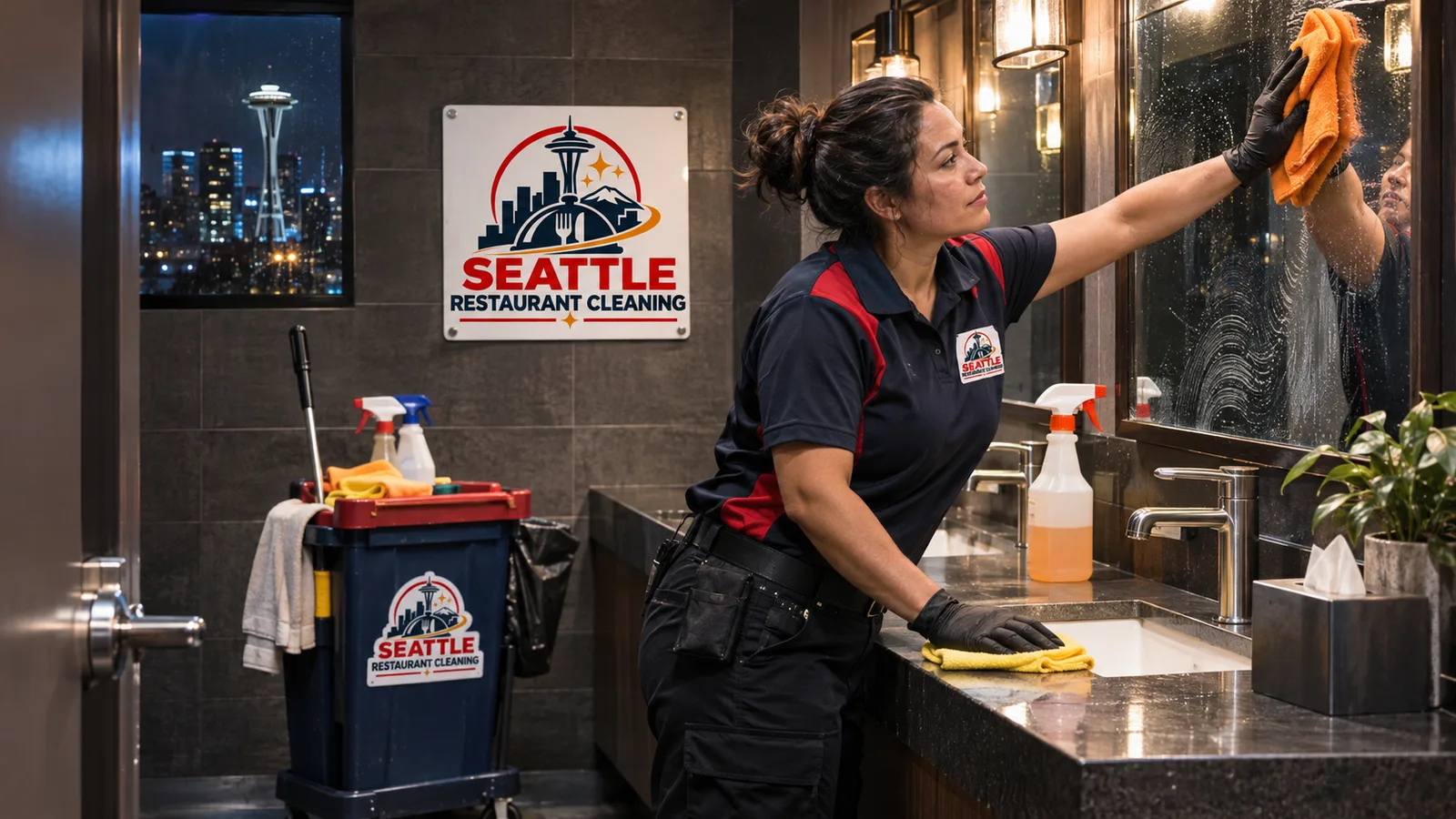
Restaurant Restroom Service · Seattle
Keep guest and employee restrooms clean, stocked, and ready for the next shift with a schedule built around your operating hours.
Cleaning Planned Around Service
Restaurant Restroom Cleaning protects one of the areas guests notice fastest. Empty dispensers, marked mirrors, unpleasant odors, and damp floors can shape a customer's opinion before the meal is over. Seattle Restaurant Cleaning handles the routine work needed to keep restrooms presentable without interfering with guests or front-of-house staff.
Our crew works from an agreed checklist, schedule, and access plan. We are a restaurant service company Seattle homeowners rely on, bringing the same practical attention to occupied commercial spaces, where timing, privacy, and consistent completion matter. Each scope can account for the number of fixtures, restroom traffic, floor material, service hours, supply responsibilities, and any recurring trouble spots.
Seattle restaurants operate in very different settings. Restrooms near Pike Place Market may see steady visitor traffic and wet-weather soil, while Capitol Hill locations often need service coordinated around late closing hours. In South Lake Union, lunch and after-work traffic can create sharp peaks. Ballard restaurants may require careful scheduling around dinner service and weekend crowds. A written plan makes those operating differences part of the work rather than an afterthought.
Cleaning Scope
A standard visit begins with waste removal and a check for visible maintenance concerns. Cleaners then work from cleaner surfaces toward dirtier touchpoints to reduce cross-contamination. Color-coded microfiber cloths and restroom-dedicated tools help keep equipment used around toilets and urinals separate from tools used on sinks and mirrors.
Typical restaurant janitorial cleaning includes disinfecting toilet seats, flush handles, urinals, partitions, door handles, faucets, counters, and dispensers. Mirrors are cleaned without streaks. Basins are scrubbed, waste liners are replaced, and floors are swept or vacuumed before damp mopping. Restocking can include toilet tissue, paper towels, soap, and sanitary disposal liners when those supplies are included in the agreement.
Disinfectant must remain visibly wet for the product's stated contact time. Applying a product and immediately wiping it away may clean the surface without completing the labeled disinfection process. Our scope also identifies tasks that need periodic attention, such as partition washing, grout detailing, floor-edge cleaning, vent dusting, and descaling around fixtures. Plumbing repairs, drain clearing, pest treatment, and hazardous-material cleanup require separate qualified services.
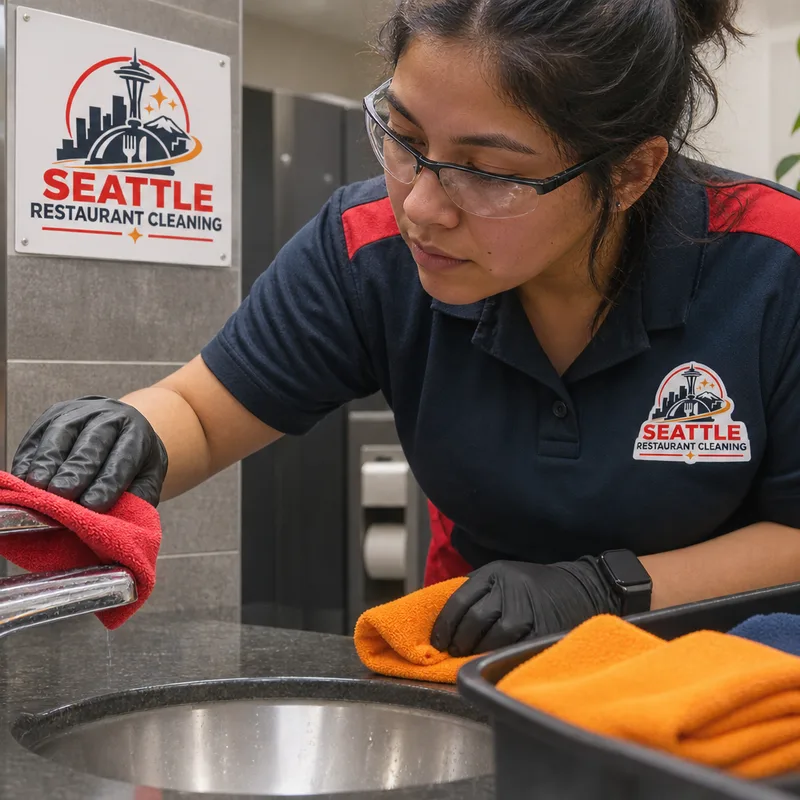
Toilets, urinals, flush controls, partition latches, door hardware, faucets, counters, and dispensers are cleaned according to the written checklist.
Loose soil is removed before mopping. The plan can address corners, floor edges, grout lines, and soil carried inside during Seattle's frequent wet conditions.
Cleaning targets waste, residue, splash zones, and damp buildup rather than relying on fragrance to cover an underlying odor.
Crews can check agreed paper goods, hand soap, and liners during each visit. Minimum stock levels and supply ownership are documented before service begins.
Leaks, loose dispensers, damaged hardware, clogged fixtures, and other visible concerns can be noted for restaurant management to address.
A site-specific checklist gives managers a clear way to confirm the assigned tasks and report anything that needs correction.
01
We review fixture counts, floor surfaces, access, current condition, supply storage, traffic patterns, and closing procedures. The walkthrough also identifies work that falls outside routine janitorial cleaning.
02
You receive a written task list for daily, nightly, or selected-day service. We clarify consumables, periodic detail work, alarm or key procedures, and the preferred communication path for your managers.
03
Restaurant Night Cleaning may begin after the last guests leave or during another low-traffic window. The access plan accounts for staff still closing the dining room and any areas that must remain available.
04
The crew follows the assigned order, allows disinfectants their labeled contact time, restocks agreed items, and checks the room before leaving. Visible maintenance concerns are reported.
05
A recurring plan can be revised when business hours, restroom traffic, fixture counts, or seasonal demand changes. Clear updates keep the checklist aligned with actual restaurant use.
Flexible Service Windows
The right frequency depends on traffic and how often employees check the room while the restaurant is open. Daily Restaurant Cleaning is often appropriate when restroom appearance can be maintained by staff between professional visits. A higher-traffic facility may need nightly service plus scheduled checks during operating hours.
Overnight Restaurant Cleaning gives the crew room to clean floors and fixtures without closing stalls around guests. For late-service restaurants, Nightly Restaurant Cleaning in Seattle can be timed around kitchen shutdown, front-of-house closeout, alarm procedures, and building access. The service window should allow enough time for the actual checklist rather than forcing cleaners to rush through contact times or leave a floor wet when staff return.
A Recurring Restaurant Cleaning agreement can cover restrooms as a defined scope even when other restaurant areas follow a different schedule. That separation helps managers understand exactly which tasks occur at each visit. For shared or building-managed restrooms, the agreement should also state which party controls access, supplies, and maintenance requests.
Seattle Conditions and Scheduling
Seattle's wet months increase the amount of moisture and street soil tracked through entrances and into customer areas. In a restroom, that can mean more visible footprints, damp floor edges, and added slip concerns. Entry matting helps, but restroom floors still need the correct cleaner, a controlled amount of solution, and a final check before the room reopens.
Older commercial spaces may also have compact layouts, aging grout, limited supply storage, or fixtures installed close together. Newer spaces can have touchless dispensers, wall-mounted fixtures, specialty partitions, and manufacturer-specific finish requirements. The cleaning method should match the material. Acidic products can damage some stone and grout, while abrasive pads may scratch polished metal or coated partitions.
A Restaurant Janitorial Company should document these conditions during the walkthrough. Seattle Restaurant Cleaning develops a scope around the facility's actual surfaces and operating pattern, then assigns daily tasks and periodic detail work separately. That makes expectations easier to inspect and keeps infrequent work from being mistaken for an every-visit task.
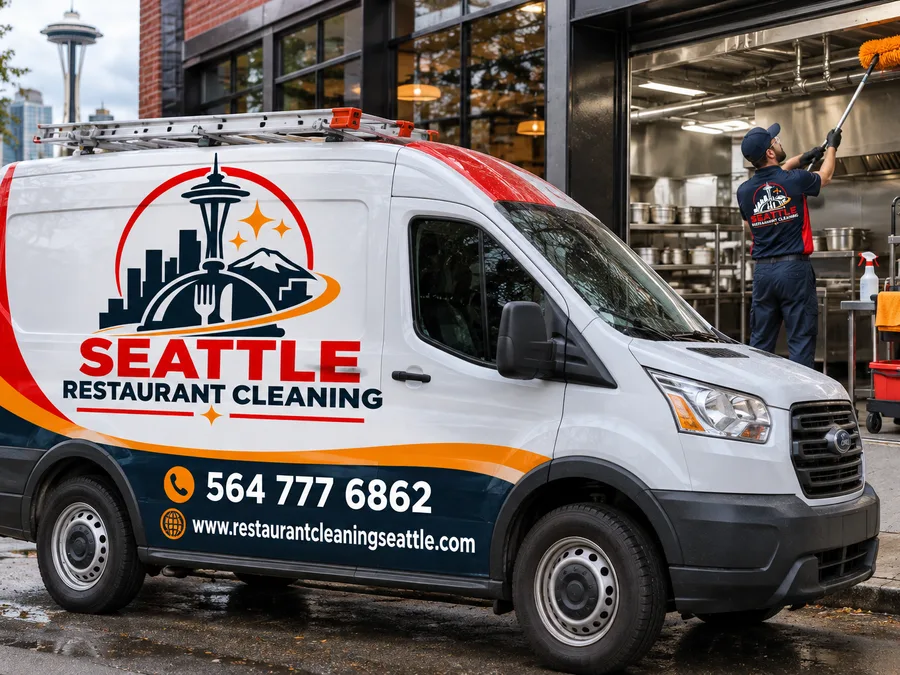
A short walkthrough can establish fixture counts, service timing, supply responsibilities, and the exact checklist your restaurant needs.
Call for a Free QuotePractical Answers
Pricing is usually based on labor time rather than a flat restroom rate. The number of restrooms and fixtures, current condition, service frequency, floor type, access window, parking or loading logistics, consumable restocking, and periodic detail work all affect the quote. A walkthrough at the restaurant is the reliable way to confirm the scope and recurring price.
Yes, nightly or overnight service can be arranged around the restaurant's closing and security procedures. Seattle locations with late hours need an access window that accounts for guests leaving, staff closeout, locked entries, alarms, and any building restrictions. The agreed schedule is documented before service begins.
The schedule should be based on restroom traffic and the restaurant's ability to perform checks during service. Many facilities use daily or nightly professional cleaning, while high-traffic periods may require staff checks and spot attention between visits. A walkthrough helps determine whether selected-day, daily, or overnight restaurant cleaning fits the operation.
Restocking can be included when the agreement identifies the products, storage location, and party responsible for purchasing them. Crews can check agreed minimum levels during each visit. If a Seattle restaurant uses proprietary dispenser cartridges, compatible stock should be available on the premises.
Cleaning removes soil and residue, while sanitizing or disinfecting uses an appropriate registered product according to its label. Disinfection requires the surface to remain wet for the stated contact time. The checklist should identify applicable touchpoints, and cleaners must follow product directions rather than mixing chemicals or using one product on every material.
Service during operating hours may be possible when access can be controlled safely and privacy can be maintained. Crews need a plan for temporary stall closures, wet-floor controls, product storage, and guest access. After-hours work is often less disruptive when the scope includes full floor cleaning and detailed fixture work.
Routine cleaning does not include plumbing repairs, drain clearing, or work that requires a licensed trade. Cleaners can report visible leaks, loose fixtures, slow drains, or a clogged toilet to the designated manager. The restaurant or property manager can then arrange the appropriate repair service.
Ask for a written checklist, service frequency, quality-control process, access procedure, chemical plan, and clear list of exclusions. Confirm how missed tasks are reported, who supplies consumables, and how schedule changes are handled. For Seattle Restaurant Janitorial Services, parking, loading access, late-night building entry, and alarm responsibilities should also be settled before the first visit.
Tell Seattle Restaurant Cleaning about your fixture count, operating hours, current concerns, and preferred service frequency. We will help define a clear scope for reliable restroom cleaning.