Kitchen Cleaning
Degreasing and cleaning for accessible equipment exteriors, prep areas, sinks, backsplashes, floor edges, and hard floors. Tasks are defined around the equipment and surfaces in your kitchen.
Serving Seattle, Washington & surrounding areas
Open 24/7
Restaurant Cleaning · Shoreline
Dependable cleaning for kitchens, dining rooms, restrooms, and service areas, planned around your operating hours and sanitation standards.
Cleaning Planned Around Service
Restaurant Cleaning Services Shoreline should support a safe, presentable operation without getting in the way of prep, service, deliveries, or closing duties. Seattle Restaurant Cleaning develops practical scopes for independent restaurants, cafés, bars, and other food-service businesses. Our team can focus on recurring nightly cleaning, scheduled deep cleaning, or a combination based on your workload and priorities.
We are restaurant service specialists serving Seattle, WA who organize the work around conditions in active food-service spaces, including grease near cooking lines, food debris under equipment, tracked-in soil at entrances, and frequent contact at doors and fixtures. Before service starts, we clarify which areas are included, when the crew can enter, how the building is secured, and which tasks remain with restaurant staff.
Shoreline businesses often need schedules that account for both evening service and early-morning preparation. Restaurants along Aurora Avenue North may also face heavier entrance soil because of vehicle traffic and frequent customer turnover. A written checklist keeps those local operating demands tied to specific tasks rather than a generic commercial routine.
Complete Cleaning Scope
A complete scope starts with the areas that affect daily operations and guest impressions. In the kitchen, work may include degreasing accessible cooking-line surfaces, cleaning prep tables and sinks, wiping equipment exteriors, removing food residue, and scrubbing or mopping floors. Detail work can address baseboards, floor edges, corners, and reachable areas beneath movable equipment.
Dining-room cleaning may include tables, chairs, booths, ledges, partitions, doors, and hard floors. Restroom service can cover toilets, urinals, sinks, mirrors, dispensers, partitions, touchpoints, and floors. Entry glass, vestibules, waiting areas, and service counters can also be assigned. The exact list depends on your layout and on what your opening or closing crew already handles.
Commercial kitchen cleaning requires the right product for each surface. A degreaser suited to quarry tile may not be appropriate for finished wood, natural stone, or some painted surfaces. Cleaning also differs from sanitizing: cleaning removes grease and soil, while sanitizing is performed on a pre-cleaned surface with an appropriate product and required contact time. Product labels and your facility procedures determine the correct method.
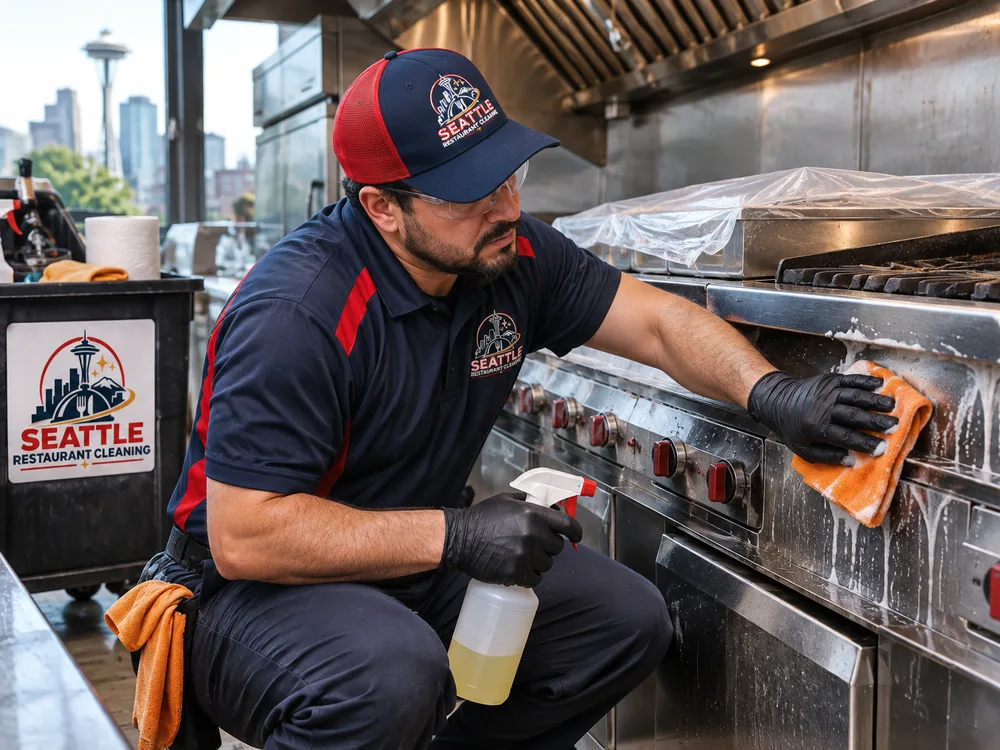
Degreasing and cleaning for accessible equipment exteriors, prep areas, sinks, backsplashes, floor edges, and hard floors. Tasks are defined around the equipment and surfaces in your kitchen.
Cleaning for tables, seating, partitions, ledges, doors, counters, and floors, with attention to crumbs, spills, fingerprints, and visible buildup.
A repeatable routine for fixtures, mirrors, partitions, dispensers, touchpoints, waste removal, and floor cleaning.
Sweeping, vacuuming, mopping, scrubbing, and edge work selected for the floor material and the amount of grease or tracked-in soil.
Periodic detail work for buildup that routine closing duties may not fully address, including corners, baseboards, wall splatter, and reachable areas behind movable items.
One coordinated scope can cover guest-facing spaces, kitchens, employee areas, storage access points, and waste-handling zones where appropriate.
01
We discuss the layout, floor materials, cooking volume, operating hours, access needs, problem areas, and the cleaning duties already assigned to staff.
02
The work is translated into an area-by-area checklist. It identifies recurring tasks, periodic deep-cleaning items, exclusions, and any surfaces that require special handling.
03
Service can be planned after closing, before prep begins, or during another agreed access window. Frequency is based on traffic, grease load, staffing, and your standards.
04
The crew follows the approved checklist. Feedback about missed details, changing operating hours, or new priorities can be used to adjust future visits.
Surface-Specific Floor Care
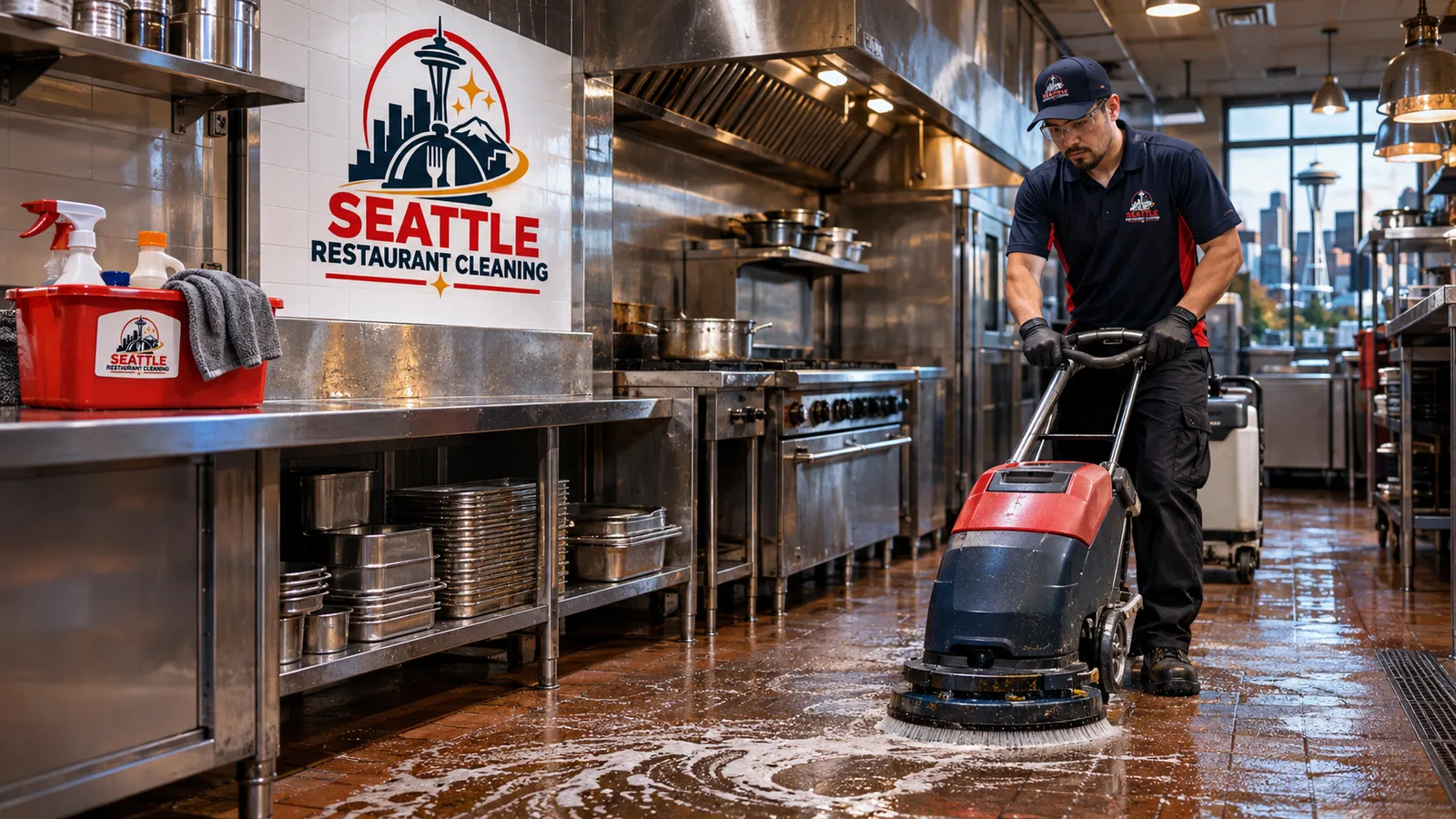
Restaurant floors collect several types of soil at once. Cooking grease can spread beyond the line on shoes and cart wheels. Beverage spills leave sticky residue, while grit at the entrance can scratch some finishes. A quick mop with dirty solution often redistributes that soil instead of removing it.
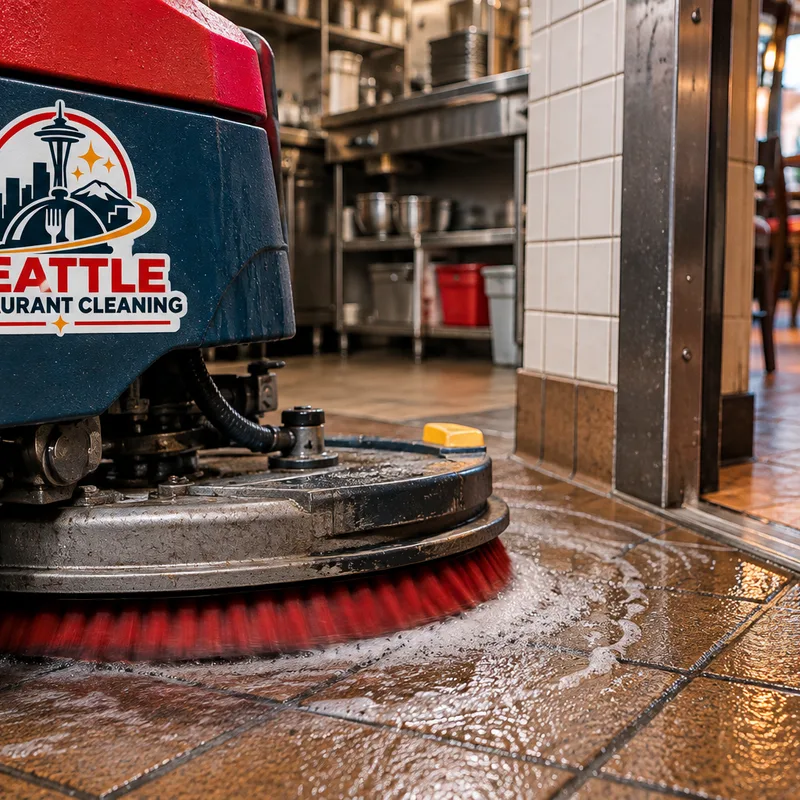
Effective floor care starts with dry soil removal, followed by the correct cleaner, dilution, dwell time, agitation, and recovery method. Mop water and tools should be changed or separated as needed so restroom soil is not carried into dining or kitchen areas. Textured tile and grout may require mechanical scrubbing, while resilient flooring or sealed surfaces need methods compatible with their finish.
Shoreline's wet-weather periods make entrance control especially useful. Mats, prompt spot cleaning, and attention to vestibules reduce the moisture and grit carried into customer areas. In neighborhoods such as North City, where restaurants may sit close to busy commercial corridors, entry conditions can change quickly during a rainy service period.
Standards and Safety
A restaurant cleaning scope should state how food-contact surfaces are handled and which duties remain under the restaurant's own food-safety procedures. Prep surfaces must be cleared before cleaning begins. Chemicals should be labeled, stored correctly, and used according to manufacturer directions, including dilution and contact-time requirements. Clean tools should also be assigned appropriately to kitchens, dining areas, and restrooms.
Routine janitorial cleaning is separate from specialized exhaust-system service. Hood, duct, and fan cleaning involves fire-safety requirements and specialized access, so those items should be identified clearly rather than assumed to be part of a general kitchen visit. The same clarity applies to pest control, grease-trap pumping, hazardous-material cleanup, and equipment repair.
Restaurants in Shoreline operate under Public Health, Seattle & King County food-safety oversight. A cleaning company does not replace management controls or required food-safety procedures, but a consistent cleaning schedule can help keep floors, accessible surfaces, and support areas ready for daily use. The restaurant remains responsible for confirming that its sanitation procedures meet applicable requirements.
Describe your layout, operating hours, and problem areas so we can prepare a practical cleaning scope for your Shoreline restaurant.
Call for a Free QuotePractical Answers
The right frequency depends on cooking volume, customer traffic, floor type, and how much cleaning employees complete during each shift. A busy cooking line may need frequent degreasing and floor service, while detail work behind movable equipment can follow a separate periodic schedule. The initial review should divide nightly, weekly, and periodic tasks according to actual soil levels.
Yes, after-hours cleaning can be arranged when access, alarm procedures, keys, lighting, and lockup responsibilities are agreed in advance. Many Shoreline restaurants need work completed between evening close and morning prep, so the proposed scope should include a realistic access window and any noise limits within the building.
Price is mainly affected by square footage, cleaning frequency, kitchen grease levels, floor materials, restroom count, furniture density, access, and the depth of the assigned tasks. A recurring maintenance visit is priced differently from an initial deep clean with heavy buildup. An on-site review provides the information needed for a written scope and tailored estimate.
An initial deep clean may be recommended when grease, grout soil, floor-edge buildup, or neglected detail work cannot be corrected during a normal maintenance visit. Starting with a reset can make the recurring checklist more realistic. The condition of Shoreline restaurant kitchens varies, so that decision should follow an inspection rather than a fixed rule.
Products must be selected for the surface, soil, and intended use, then applied according to their labels. Food and utensils should be protected or removed before work begins, and food-contact surfaces require the restaurant's approved cleaning and sanitizing procedure before use. Natural stone, finished wood, aluminum, and some coatings may require product restrictions.
Yes, one visit can cover front-of-house and back-of-house areas when the scope and service window allow enough time. Separate tools and task order help control cross-contamination between restrooms, dining spaces, and food-preparation areas. The checklist can also identify areas that restaurant staff must clear before the crew arrives.
Tell Seattle Restaurant Cleaning about your hours, floor surfaces, kitchen conditions, and service priorities. We will discuss a schedule and written scope that fit the way your restaurant operates.