Open Ceilings and Beams
Exposed structures have many horizontal edges where dust settles. The scope should identify fragile finishes, peeling coatings, and surfaces that cannot tolerate moisture.
Serving Seattle, Washington & surrounding areas
Open 24/7
Restaurant High Dusting · Bellevue
Remove settled dust and greasy residue from hard-to-reach overhead surfaces with a planned cleaning scope built around your kitchen, access conditions, and operating schedule.
Cleaning Above the Routine Line
Restaurant High Dusting Bellevue addresses buildup on surfaces that routine floor and counter cleaning cannot reach. Open ceilings, pipes, conduit, duct exteriors, light housings, ceiling vents, beams, ledges, and the tops of tall fixtures can collect airborne dust and residue. In a commercial kitchen, cooking aerosols can make that material cling to overhead surfaces rather than fall away.
Seattle Restaurant Cleaning plans the work around the room, the type of buildup, and the safest access method. For each project, an experienced restaurant service team in Seattle coordinates protection, access, cleaning, and final inspection so restaurant operators receive a defined scope rather than a generic dusting visit. Our Seattle base also gives us practical access to Bellevue businesses across Lake Washington.
High dusting is distinct from exhaust-system cleaning. It targets accessible room surfaces and exterior components, not the interior of grease ducts, fans, or listed kitchen exhaust systems. If an area requires a licensed specialty contractor, it should be identified during the scope review instead of being treated as ordinary overhead cleaning.
Cleaning Scope
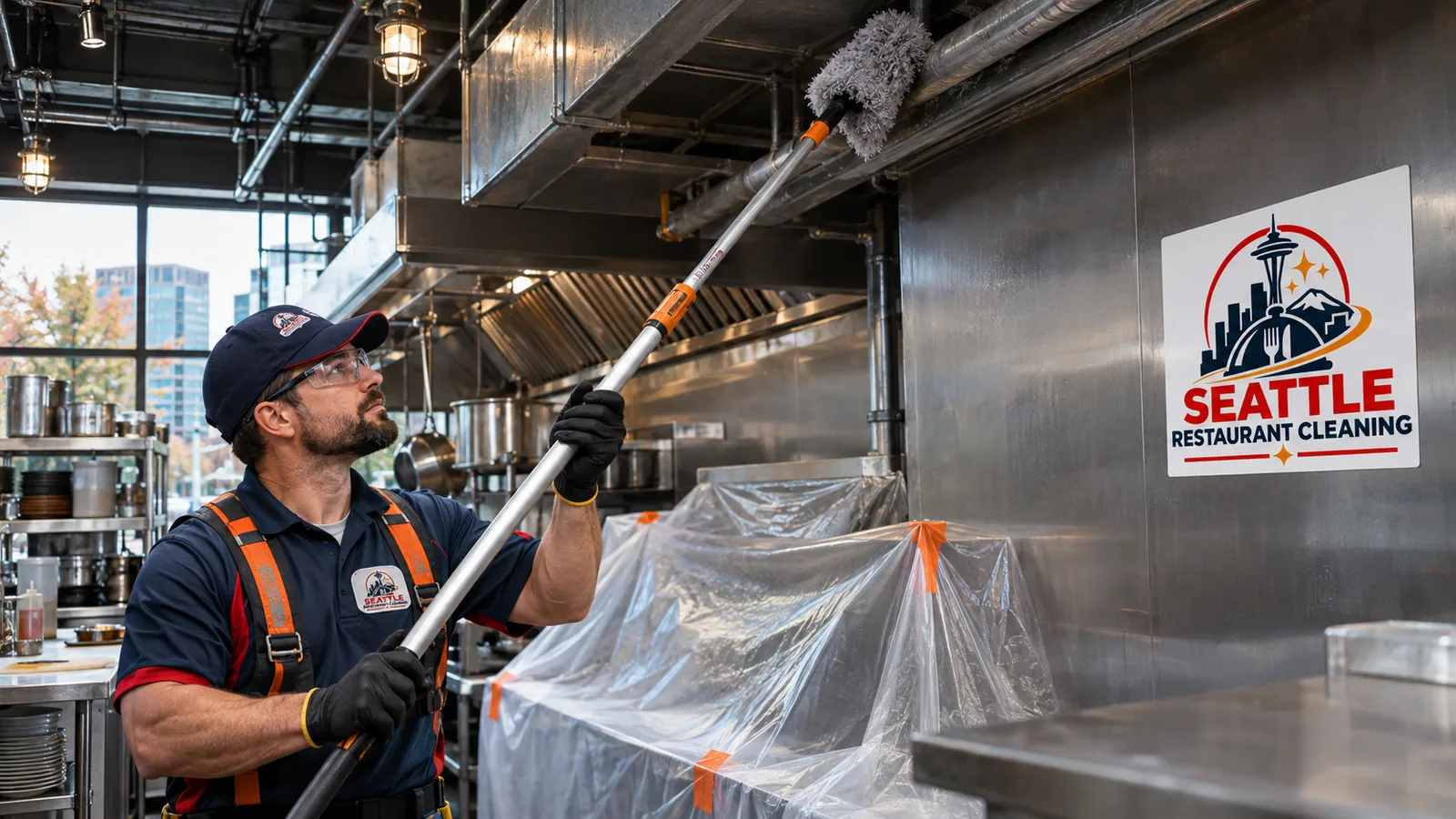
The cleaning plan starts with a visual review of overhead surfaces. Common targets include exposed rafters, ceiling panels, wall-to-ceiling junctions, suspended signs, supply and return vent covers, sprinkler-pipe exteriors, cable trays, accessible duct exteriors, refrigeration tops, and upper shelving. Only surfaces that can be reached and cleaned without disturbing protected building systems belong in the working scope.
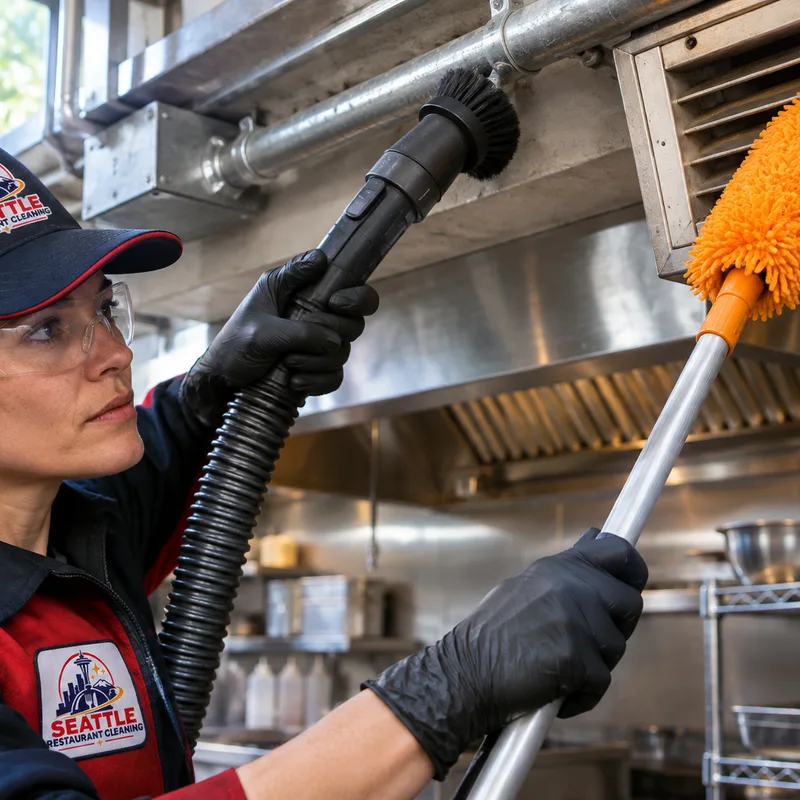
Methods vary by surface and soil. HEPA-filtered vacuuming can capture loose particulate at the source. Microfiber tools help collect fine dust instead of pushing it into the room. Damp wiping may be appropriate for washable, nonporous components with adhered residue. Greasy film can require a compatible degreaser and controlled application. Sensitive equipment, food-contact surfaces, open ingredients, and smallwares should be removed or securely covered before work starts.
A clear Restaurant Kitchen Cleaning Bellevue plan also considers what is directly under the work area. Prep tables, cooklines, service counters, and dish areas may need separate protection or temporary clearance. Overhead work should be completed before the final low-level wipe-down so dislodged material is removed before the room returns to use.
Critical Overhead Areas
Exposed structures have many horizontal edges where dust settles. The scope should identify fragile finishes, peeling coatings, and surfaces that cannot tolerate moisture.
Accessible exterior surfaces can be vacuumed or wiped when doing so will not disturb insulation, labels, controls, or life-safety components.
Vent covers and fixture exteriors often collect visible residue. Power, heat, access, and manufacturer restrictions must be considered before cleaning.
Door frames, refrigeration tops, shelving caps, and wall ledges can hold material outside the normal line of sight but still within the kitchen environment.
Decorative beams, suspended elements, and high ledges may need lower-moisture methods and careful protection of tables, point-of-sale equipment, and finishes.
Frequent door movement can introduce outdoor particulate. High shelves and overhead surfaces in receiving areas should be assessed separately from food-production spaces.
Bellevue Access and Scheduling
Downtown Bellevue restaurants often operate in multistory commercial buildings where loading access, freight-elevator rules, and property-management coordination can shape the work window. In Old Bellevue, smaller storefronts may offer less room to stage ladders and equipment, so clearing a safe work zone matters. BelRed has a mix of restaurant, retail, and light-commercial properties where exposed ceilings and larger service areas can create a broader overhead scope. Factoria businesses may need cleaning coordinated with shopping-center access and shared loading procedures.
These conditions affect labor and sequencing more than the cleaning method itself. The estimate should account for ceiling height, obstructions, ladder or lift access, equipment protection, parking or loading restrictions, and the time available before staff return. Work near sprinkler heads, alarms, electrical components, or active HVAC equipment requires extra care. Cleaning crews should never paint over, disconnect, reposition, or obstruct those systems.
Bellevue restaurants also deal with wet Pacific Northwest conditions that can track moisture and street soil into receiving areas. High dusting does not replace entry, floor, or hood maintenance, but it can fit into a broader sanitation schedule when overhead buildup is visible or when a deep cleaning is being planned.
01
The first step identifies target surfaces, ceiling heights, soil type, fragile finishes, restricted components, and any areas excluded from ordinary cleaning. Photos or an on-site review can help establish the scope.
02
The work window is coordinated around food preparation, staff movement, deliveries, building access, and any required ladder or lift staging. Kitchens usually need to be inactive in the immediate work zone.
03
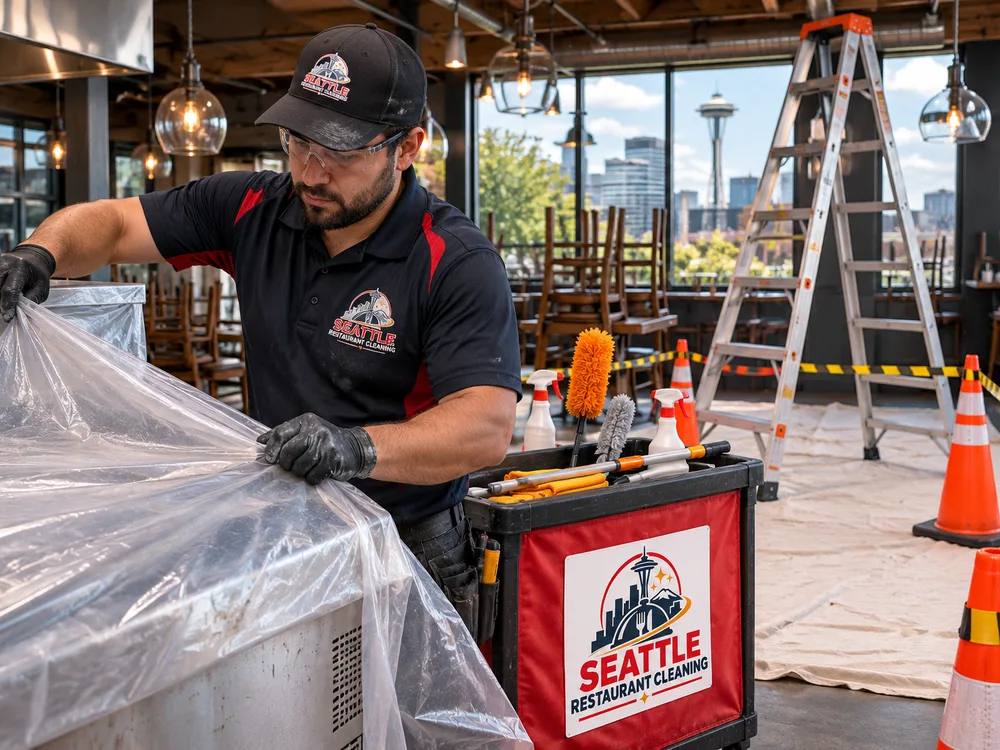
Open food is removed, and exposed food-contact surfaces, appliances, controls, and small equipment are covered or relocated as appropriate. The crew establishes a controlled zone under each overhead area.
04
Technicians work methodically with HEPA-filtered vacuums, extension tools, microfiber materials, and compatible cleaning products selected for the surface. Work proceeds from higher surfaces toward lower ones.
05
Protective coverings are removed carefully, affected lower surfaces are detailed, and the completed areas are checked against the agreed scope. Any inaccessible or damaged surface is documented for the operator.
Controlled Overhead Work
Restaurant high dusting should be performed in a controlled work zone. Staff and customers need to remain clear of ladders, lifts, extension poles, and falling particulate. Cleaning over active food preparation is inappropriate. Ingredients should be sealed or removed, and food-contact surfaces need protection followed by cleaning and sanitizing under the restaurant's own food-safety procedures before production resumes.
Access equipment must suit the ceiling height and floor conditions. A ladder may work for a clear, level area, while taller or obstructed spaces may require different equipment and added setup time. Operators should disclose unstable shelving, active leaks, exposed wiring, damaged ceiling material, or other hazards during the review.
The work also has firm boundaries. High dusting does not include servicing electrical fixtures, opening HVAC equipment, moving sprinkler components, entering exhaust ductwork, or remediating suspected hazardous materials. If residue appears unusual, the affected area should be evaluated before cleaning continues.
Pricing Guidance
Restaurant high dusting in Bellevue typically costs about $600 to $2,500 for a defined commercial area, while tall ceilings, heavy greasy residue, lift access, or a large multiroom scope can cost more. Small dining or storage areas usually fall toward the lower end; full kitchens with exposed overhead systems trend higher.
Final pricing depends on square footage, ceiling height, buildup, surface type, access, protection needs, work hours, and building requirements. The exact cost is confirmed after a site review or a detailed assessment of the space.
Share the approximate kitchen size, ceiling height, operating window, and photos of the overhead buildup to receive a practical scope for your Bellevue restaurant.
Call for a Free QuotePractical Answers
High dusting should not take place over active food preparation or occupied work zones. The safest plan is usually an after-hours or closed-period visit, with ingredients removed or sealed and food-contact surfaces protected. Bellevue properties with restricted loading or building access may require additional scheduling coordination.
A limited overhead area may take several hours, while a full kitchen, dining room, or multiroom restaurant can require a longer shift or staged visits. Ceiling height, residue, obstructions, access equipment, and setup all affect duration. The expected work window should be set after the scope review.
The right frequency is based on inspection rather than a universal interval. Open ceilings, high cooking volume, visible dust, greasy aerosols, frequent receiving-door use, and renovation debris can shorten the interval. Many operators add overhead surfaces to routine facility inspections and schedule cleaning when accumulation becomes apparent.
Ordinary kitchen high dusting does not include cleaning inside grease ducts, fans, or listed exhaust systems. It may include accessible exterior surfaces when they can be cleaned safely. Exhaust-system work is a separate specialty scope and should follow the applicable fire-safety and system requirements.
Movable items and exposed smallwares should usually be cleared from the work zone, but heavy fixed equipment may remain when it can be protected safely. The pre-service plan identifies what restaurant staff must remove, what the crew can cover, and where ladder or lift clearance is required.
Yes, many washable surfaces can be cleaned when the residue is accessible and the finish tolerates an appropriate degreaser. Thick, aged, or heat-bonded deposits may require repeated treatment, and porous ceiling materials may not clean evenly. A test area can help determine the likely result.
Useful details include approximate room dimensions, ceiling height, photos, the type of ceiling, visible residue, operating hours, parking or loading conditions, and whether a lift can enter the space. Downtown Bellevue buildings may also require information about freight elevators, property-management approval, and approved work windows.
Describe the overhead surfaces, access conditions, and preferred work window. Seattle Restaurant Cleaning will help define a sensible scope for removing buildup while protecting your kitchen and its equipment.