Cookline Exteriors
Grease accumulates on equipment fronts, sides, legs, casters, backsplashes, and adjacent washable walls. The scope can include accessible spaces revealed when approved movable units are pulled forward.
Serving Seattle, Washington & surrounding areas
Open 24/7
Kitchen Deep Cleaning · Kent
Remove stubborn grease, food residue, and tracked-in soil with a detailed cleaning plan built around your equipment, flooring, and operating schedule.
Cleaning Planned Around Service
Restaurant Kitchen Deep Cleaning Kent work should address the buildup that daily closing routines leave behind. Aerosolized cooking oil settles on equipment exteriors, walls, pipes, shelving, and floor edges. Spills collect beneath movable appliances, while traffic presses grease and food soil into textured flooring and grout lines. A planned deep clean targets those areas without confusing routine sanitation with occasional heavy cleaning.
Seattle Restaurant Cleaning starts by discussing the kitchen layout, operating hours, known problem areas, and surfaces that require special handling. Working as Seattle's trusted restaurant service team, we define the scope before cleaning begins so managers know which areas are included, what must be moved, and when the kitchen can return to normal use. Our Seattle base on South Massachusetts Street also keeps us positioned for scheduled commercial work in Kent and the south King County area.
The goal is a cleaner, safer workspace with a scope suited to the actual kitchen. That may mean concentrating on a high-volume cookline, addressing neglected perimeter buildup, or pairing full kitchen cleaning with detailed floor care. Scheduling can be planned for a closed period so staff and cleaning crews are not competing for the same space.
Cleaning Scope
A useful scope follows the flow of the kitchen. The cookline commonly needs degreasing around equipment sides, fronts, legs, casters, backsplashes, and nearby walls. Preparation and warewashing areas may need attention around shelving supports, sink bases, splash zones, and hard-to-reach corners. Door faces, kick plates, washable wall surfaces, and accessible overhead pipes can also collect residue.
Before work begins, the cleaning method should be matched to the surface and soil. Degreaser needs adequate dwell time to loosen oily deposits before agitation and recovery. Stainless steel should be cleaned with the grain, while painted surfaces, aluminum, grout, and resilient flooring may require different chemistry. Mixing incompatible products is unsafe, so product selection and rinsing procedures matter.
Deep cleaning does not replace staff food-contact sanitation, pest control, hood and duct service, or equipment repair. Those tasks have separate procedures and responsibilities. A written scope distinguishes them from the accessible equipment exteriors, floors, walls, and structural surfaces included in the cleaning visit.
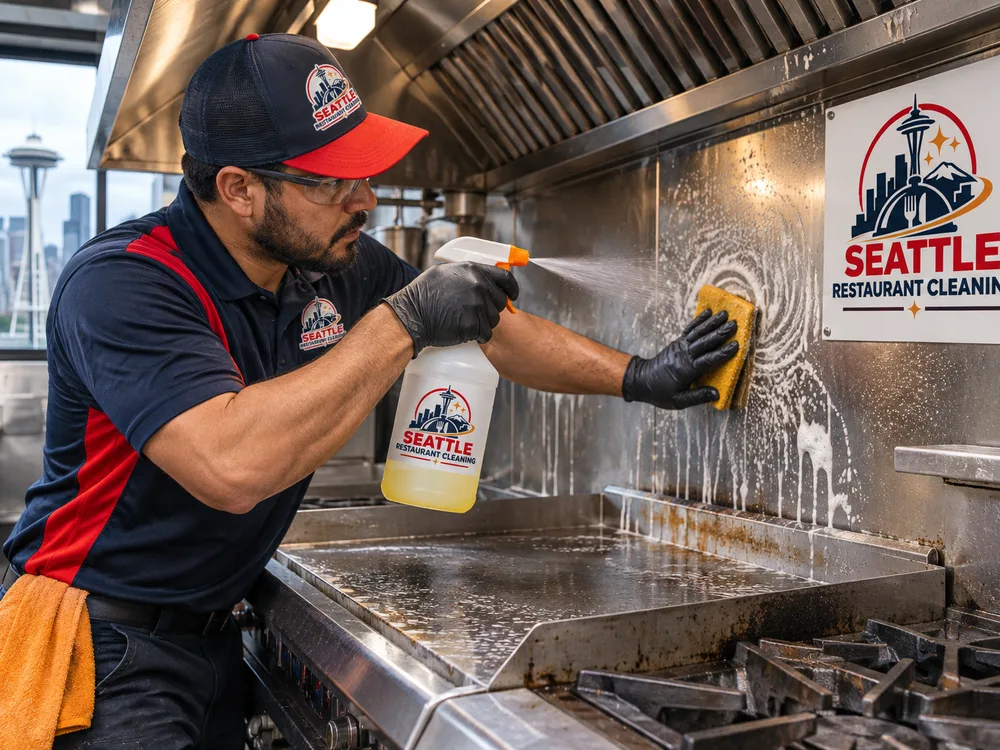
Grease accumulates on equipment fronts, sides, legs, casters, backsplashes, and adjacent washable walls. The scope can include accessible spaces revealed when approved movable units are pulled forward.
Shelf supports, table legs, kick plates, door faces, and floor-wall junctions can hold residue even when open work surfaces receive daily attention.
Moisture, detergent residue, and food soil collect around sink bases, machine exteriors, splash zones, drains, and corners. Cleaning methods must suit the surrounding materials.
Floor edges, grout lines, utility penetrations, and spaces behind movable equipment often require hand detailing after the main soil has been removed.
Kitchen entrances and routes between storage, preparation, and cooking areas receive concentrated foot and cart traffic. These lanes may need repeated agitation and extraction.
Accessible floors and washable surfaces around interior waste staging areas can be degreased and rinsed as part of a clearly defined kitchen scope.
Floor-Specific Cleaning
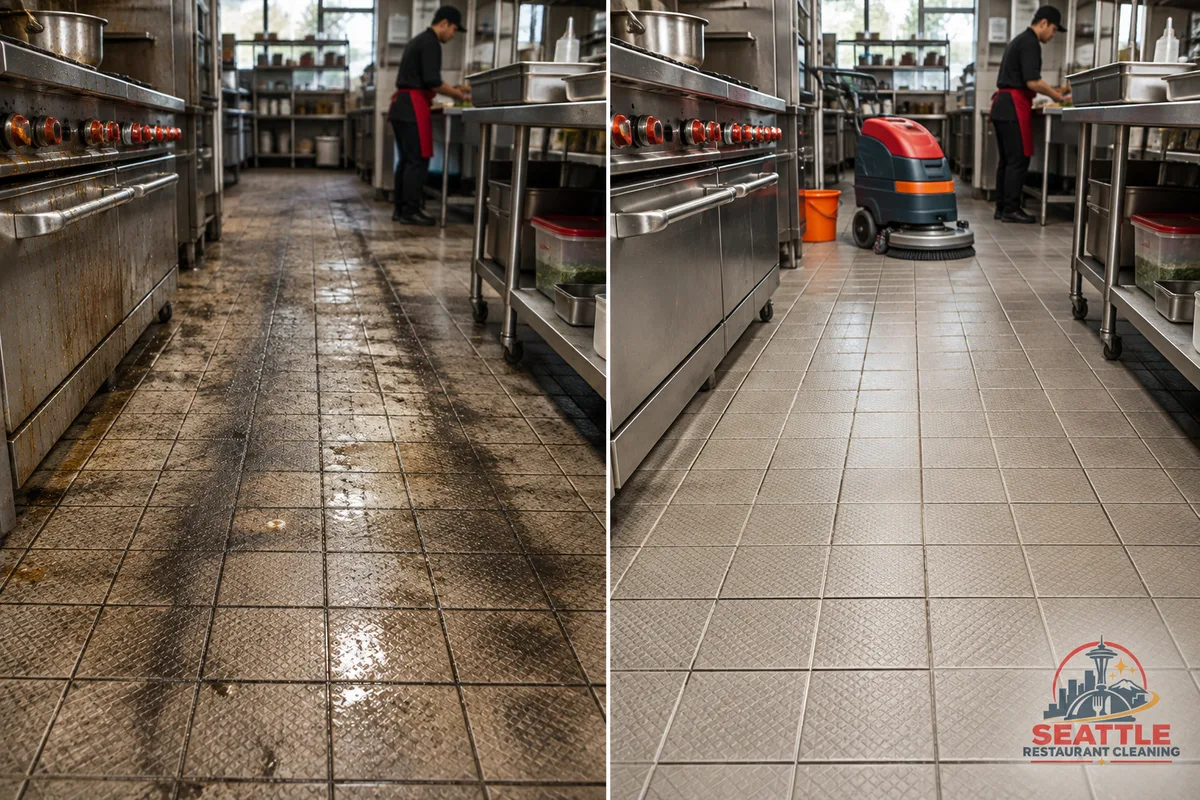
Restaurant Floor Cleaning Kent work starts with identifying the floor material, finish, drainage, and soil load. Quarry tile and grout often need alkaline degreasing, dwell time, mechanical agitation, and controlled recovery. Textured safety flooring can trap oily soil in its profile, so a quick mop may spread residue rather than remove it. Resilient flooring and sealed surfaces require products that will not damage the finish or leave a slippery film.
A proper sequence removes loose debris first, applies correctly diluted cleaner, agitates edges and traffic lanes, and recovers the dirty solution. The floor is then rinsed as appropriate and left to dry before normal traffic resumes. Drain covers and accessible floor-wall junctions can be detailed when included, but cleaning chemicals should never be allowed to enter drainage systems without control.
Kent's wet-season foot traffic can carry additional water and grit through receiving doors and staff entrances. In busy commercial areas such as Downtown Kent and the Kent Valley, delivery activity can add tracked-in soil to already greasy kitchen routes. That makes entrance lanes, receiving paths, and transitions around mats sensible priorities during floor cleaning.
01
We review the kitchen layout, flooring, equipment access, operating hours, and priority buildup. Managers receive a defined scope and preparation requirements before the scheduled visit.
02
Food, utensils, disposable packaging, and exposed preparation items must be removed or securely protected. Equipment is shut down and cooled when needed, and staff identify anything that must not be moved.
03
Loose debris is collected before wet work. Surface-compatible degreaser is applied at the correct dilution and given time to loosen greasy deposits.
04
Equipment exteriors, edges, corners, grout, and traffic lanes are scrubbed with suitable tools. Dirty solution and loosened soil are recovered rather than redistributed across the kitchen.
05
Included surfaces are rinsed or wiped according to the product and material. The crew reviews the completed scope, notes any inaccessible or damaged areas, and allows floors to dry before reopening the work zone.
Site-Specific Planning
No two commercial kitchens accumulate soil in exactly the same way. A quick-service cookline with fryers has different grease patterns than a bakery, café, commissary, or full-service restaurant. Equipment spacing, floor texture, production volume, ventilation performance, and the time since the last deep clean all affect the labor and products required.
Access is a major planning issue. Movable equipment may need to be cooled, disconnected, or handled by authorized personnel before cleaning can reach behind it. Fixed appliances, gas connections, electrical components, damaged grout, and unsealed surfaces can limit what can be safely cleaned. These conditions should be identified during scoping rather than discovered after work begins.
Frequency should be based on actual buildup. Some operators schedule recurring deep cleaning around production cycles, while others arrange work before an inspection, after a heavy season, during a change of occupancy, or when daily routines no longer control perimeter grease. A repeatable written scope gives managers a practical baseline for future visits.
A walkthrough and written scope can identify priority grease zones, floor conditions, access requirements, and a workable cleaning window before the crew arrives.
Call for a Free QuotePractical Answers
Pricing depends on kitchen size, grease severity, floor material, equipment access, and the number of labor hours needed. A compact kitchen with open access usually requires less work than a large cookline with heavy buildup, textured tile, and equipment that needs approved movement. Photos and a walkthrough help define the scope, and the exact price should be confirmed in writing before service.
The closure window depends on the scope, but the kitchen must remain clear while chemicals, wet floors, and equipment access create work hazards. Smaller targeted jobs may fit within an overnight closure, while extensive grease removal or large floor areas can require more time. Kent restaurants should also allow for cooling equipment before work and drying floors before staff return.
Staff should remove or securely protect food, utensils, small appliances, packaging, and preparation items from the work zone. Cooking equipment may need to be shut down and fully cooled. The manager should also identify fragile surfaces, fixed utility connections, alarm procedures, loading access, and any equipment that the cleaning crew is not authorized to move.
Deep cleaning can remove substantial grease and soil, but permanent discoloration, damaged grout, etched metal, worn coatings, and grease absorbed into porous materials may remain. A test area can show how a surface responds. Cleaning cannot repair failed seals, cracked tile, corrosion, or damage hidden beneath fixed equipment.
Food-contact surfaces are included only when the agreed scope and sanitation procedure specifically identify them. Restaurants remain responsible for protecting food and utensils and for following their required wash, rinse, and sanitizing procedures before production resumes. Deep cleaning commonly focuses on equipment exteriors, floors, washable walls, shelving structures, and other non-food-contact areas.
Yes, floor cleaning can be scoped as a focused service when the main concern is greasy traffic lanes, textured flooring, grout, edges, or receiving paths. The cleaning method still depends on the floor material and drainage conditions. In Kent kitchens with wet-weather soil entering through service doors, mats and entry routes should be addressed as part of the floor plan.
Hood and duct cleaning should be treated as a separate specialist scope unless it is expressly included and performed by qualified personnel. General kitchen deep cleaning may cover accessible exterior surfaces around the cookline, but it should not be assumed to include filters, plenums, fans, rooftop components, or exhaust ducts. Confirm those boundaries before scheduling.
Tell Seattle Restaurant Cleaning about the kitchen layout, floor type, operating schedule, and areas with the heaviest buildup. We will help define a practical scope and cleaning window for your Kent restaurant.