
Cookline Grease
Focused kitchen floor degreasing breaks up oily buildup near fryers, ranges and other cooking equipment, where airborne grease and spills settle repeatedly.
Serving Seattle, Washington & surrounding areas
Open 24/7
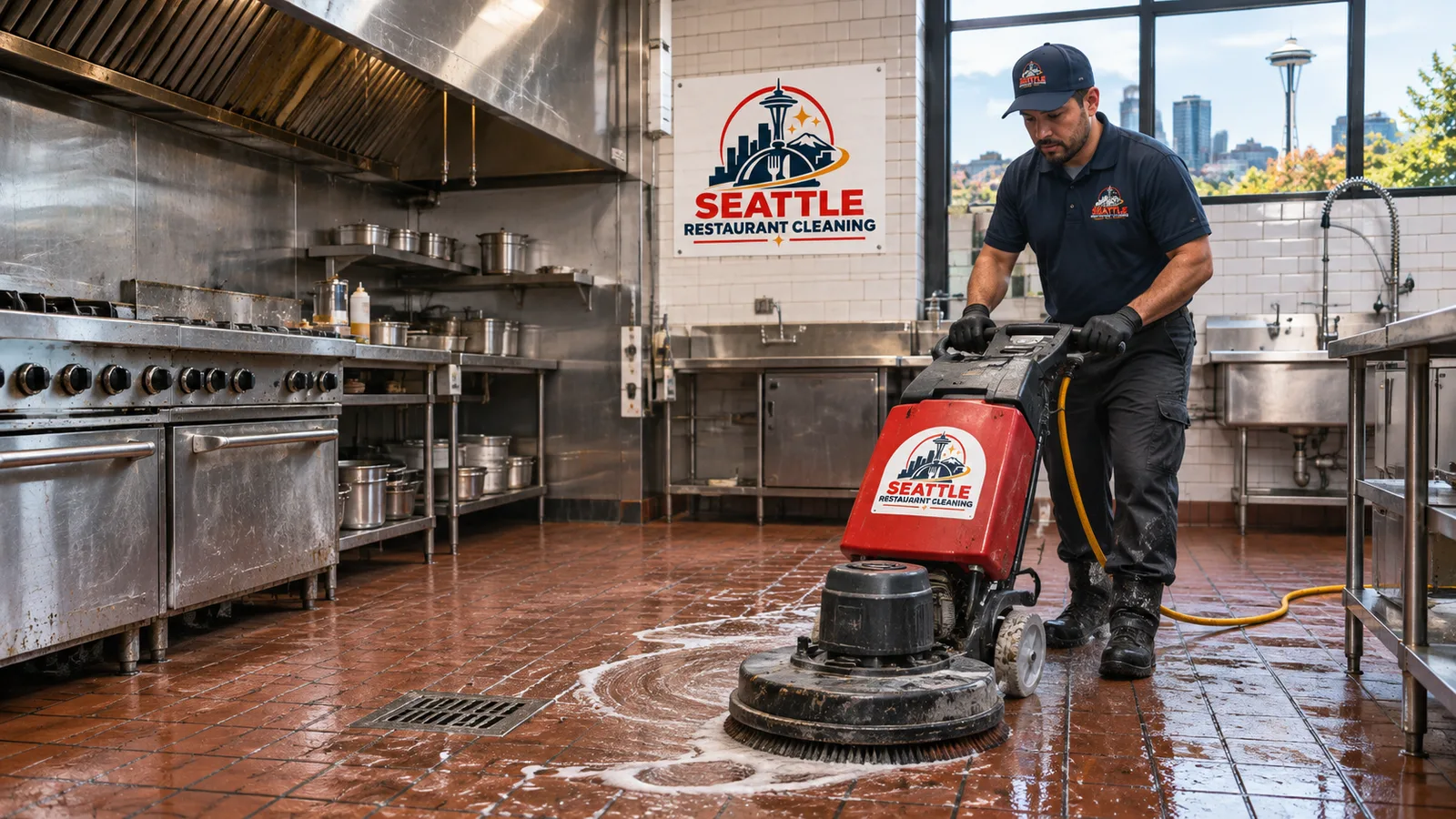
Kitchen Floor Cleaning · Seattle
Remove built-up grease, food soil and grime from tile and grout with a cleaning plan fitted to your kitchen, flooring and operating hours.
Cleaning Planned Around Operations
Commercial Kitchen Floor Cleaning targets the grease film, tracked soil and compacted residue that routine sweeping and mopping can leave behind. Seattle Restaurant Cleaning treats the floor as a working surface, accounting for tile type, grout condition, equipment placement, floor drains and the amount of buildup before selecting chemistry and equipment.
Our goal is to release greasy soil without leaving a slick chemical film or flooding areas that should remain controlled. We are Seattle's local restaurant service, planning the work around access and operating needs, then explaining the proposed scope before cleaning starts. Our address on South Massachusetts Street places us near the industrial and food-service activity of SoDo, where loading schedules and busy production areas often make careful timing as important as the cleaning itself.
The service can be arranged for a focused problem area, a one-time deep clean or recurring floor care. The right frequency depends on cooking volume, the amount of frying, floor texture, grout depth and how quickly grease returns between visits.
Surface-Specific Cleaning
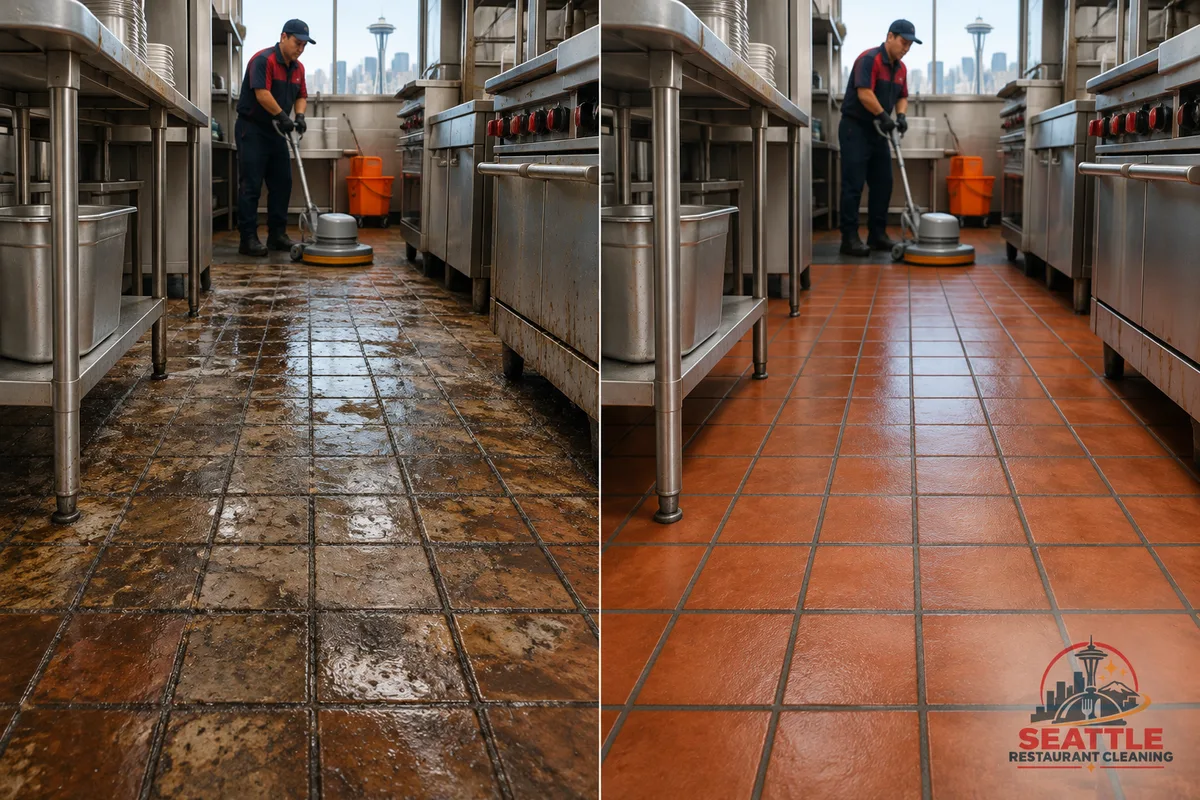
Quarry tile and other textured commercial flooring can hold greasy soil in low points even after the surface has been mopped. Grout joints are more porous than many tiles, so dark lines may contain embedded soil rather than a simple surface stain. Restaurant tile cleaning should therefore address both the tile face and the joints instead of relying on repeated passes with a mop.
We begin by identifying the flooring and checking inconspicuous areas for chemical compatibility. A suitable alkaline degreaser is given the dwell time needed to loosen food fats and oily residue. Mechanical agitation then works the solution across textured tile and into grout lines. The released soil must be recovered rather than spread across the room, followed by controlled rinsing and drying.
Restaurant grout cleaning can improve the appearance of joints, but permanent discoloration, missing grout, cracked tile and failed repairs are not removable soil. We identify those conditions so cleaning expectations remain realistic. Areas around fryers, cooklines, dish stations, prep tables and floor-wall transitions often need more detailed agitation than open walking lanes.
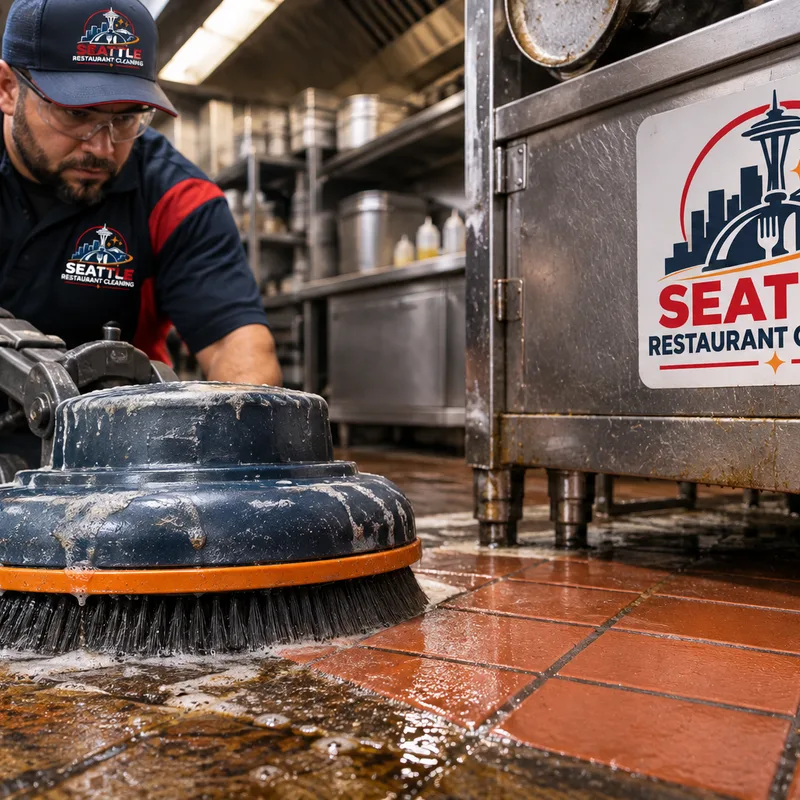
Focused kitchen floor degreasing breaks up oily buildup near fryers, ranges and other cooking equipment, where airborne grease and spills settle repeatedly.
Agitation reaches textured tile and recessed grout joints that a flat mop may pass over without removing embedded soil.
Detail work addresses accessible toe kicks, floor-wall transitions, corners and equipment edges where residue collects outside open lanes.
Cleaning removes food soil, tracked residue and greasy film around dishwashing and preparation zones while accounting for drains and nearby equipment.
When included in the scope, commercial floor cleaning can cover compatible hard flooring in service lanes, counters and guest areas as well as the kitchen.
Scheduled cleaning controls repeat buildup before heavy grease becomes harder to remove, with frequency based on actual kitchen use.
01
We identify the flooring, problem zones, grout condition, drains, movable equipment and any areas that require special handling. The inspection also helps separate removable buildup from wear or damage.
02
The work area, cleaning method and access window are agreed upon before service. For restaurants in Capitol Hill, late operating hours can affect scheduling, while Pike Place Market businesses may need to plan around constrained service access and heavy daytime foot traffic.
03
Loose food particles and dry debris are collected first. Accessible sensitive surfaces are protected as needed, and cleaning solution is kept within the intended work area.
04
The selected solution is applied at an appropriate dilution and allowed to dwell without drying on the floor. Scrubbing equipment and detail tools loosen residue from tile texture, grout joints, edges and accessible areas around equipment.
05
Suspended grease and dirty solution are extracted or otherwise recovered. Controlled rinsing removes remaining soil and cleaning residue while avoiding unnecessary water spread.
06
The floor is checked after cleaning, and persistent damage or discoloration is noted. The area needs adequate drying time before normal kitchen traffic resumes.
Local Scheduling
Seattle restaurants vary widely in access and service patterns. In SoDo, larger production kitchens may have loading access but extensive cooklines and back-of-house floor area. Downtown and Pike Place Market locations can have tighter delivery windows, smaller storage areas and limited room to stage equipment. Capitol Hill restaurants often operate late, so work may need to start after closing. Ballard kitchens may combine neighborhood dining volume with compact back-of-house layouts. Each condition changes how equipment, hoses, wet solution and drying time should be managed.
Wet weather also increases the soil carried through entrances and service doors. That tracked grit can mix with greasy film and settle into textured flooring, especially along routes between receiving areas, kitchens and waste handling points. The scope should account for those traffic paths instead of treating every square foot alike.
Restaurant Floor Cleaning in Seattle works best when the plan reflects actual operations. A high-volume fry station may need more frequent restaurant floor degreasing than a lower-grease prep area. Recurring service can be adjusted after seeing how quickly residue returns, rather than assigning the same interval to every kitchen.
Scope and Preparation
Pricing and timing depend on measurable conditions: total cleanable area, floor material, grease load, grout depth, equipment access, floor drains, available water and the amount of detail work. Heavy buildup may require repeat agitation or separate treatment of cookline zones. A small but tightly packed kitchen can take longer per square foot than an open floor with light soil.
Before service, remove loose inventory and personal items from the floor, secure food and confirm which equipment may be moved. Large appliances should remain in place unless safe movement has been arranged in advance. Tell us about loose tile, damaged grout, leak concerns, sensitive adjacent materials or prior coatings. These details help us select a safe method and provide a written scope based on the conditions that will be encountered.
Seattle Restaurant Cleaning can coordinate one-time deep cleaning or a recurring plan. The proposal should state the included areas, expected preparation, access window and any limitations caused by permanent staining or floor damage.
Describe the flooring, kitchen size, problem areas and preferred access window to receive a practical cleaning scope for your restaurant.
Call for a Free QuotePractical Answers
Restaurant floor cleaning is usually quoted after the cleanable area, grease level, floor type and access conditions are known. A compact open kitchen with moderate soil requires a different scope than a large cookline with heavy buildup, deep grout joints and equipment that limits machine access. Seattle access constraints, parking, after-hours timing and drying requirements may also affect the quote. An inspection or detailed description is used to confirm the exact cost.
A small, accessible kitchen may be completed within one service window, while larger or heavily soiled floors can require more time. The schedule includes setup, degreaser dwell time, agitation, soil recovery, rinsing and drying. Downtown and Pike Place Market locations may also require extra planning for loading and equipment staging. The expected duration is confirmed after the floor and access conditions are reviewed.
Professional restaurant grout cleaning can remove substantial embedded soil, but it cannot reverse permanent discoloration, missing grout or material damage. Results depend on grout porosity, prior coatings, grease age and whether repeated mopping has packed residue into low joints. A test area can help distinguish cleanable soil from staining before the full floor is treated.
We clean under equipment only when the area is safely accessible or the equipment has been moved through an agreed plan. Heavy fryers, ranges and connected appliances should not be shifted casually because of gas, electrical, water, ventilation and leveling concerns. Accessible edges, toe kicks and gaps can be detailed, while larger movement should be discussed before the Seattle service visit.
The right interval is based on cooking volume, grease production, floor texture and how quickly residue returns. Fry-heavy operations may need shorter intervals than kitchens with limited oil use. Daily in-house sweeping and mopping should continue between professional visits. After an initial cleaning, the return rate of grease provides a practical basis for setting a recurring schedule.
Removing grease and cleaning residue can improve traction when contamination is causing a slick film, but cleaning cannot correct worn texture, damaged flooring, drainage problems or an unsuitable floor material. Slip conditions also depend on active spills, footwear and ongoing kitchen practices. The floor should remain out of use until it is rinsed, recovered and adequately dry.
After-hours service can often be planned when access, noise, security and drying time are confirmed in advance. Late-closing Capitol Hill restaurants and tightly scheduled Downtown kitchens may need a carefully defined start time and reopening deadline. Staff should secure food, clear agreed floor areas and identify any equipment or doors that cannot be blocked.
Share the floor type, approximate area, grease concerns and operating schedule. Seattle Restaurant Cleaning will outline the preparation, cleaning approach and access needed before work starts.